Vita
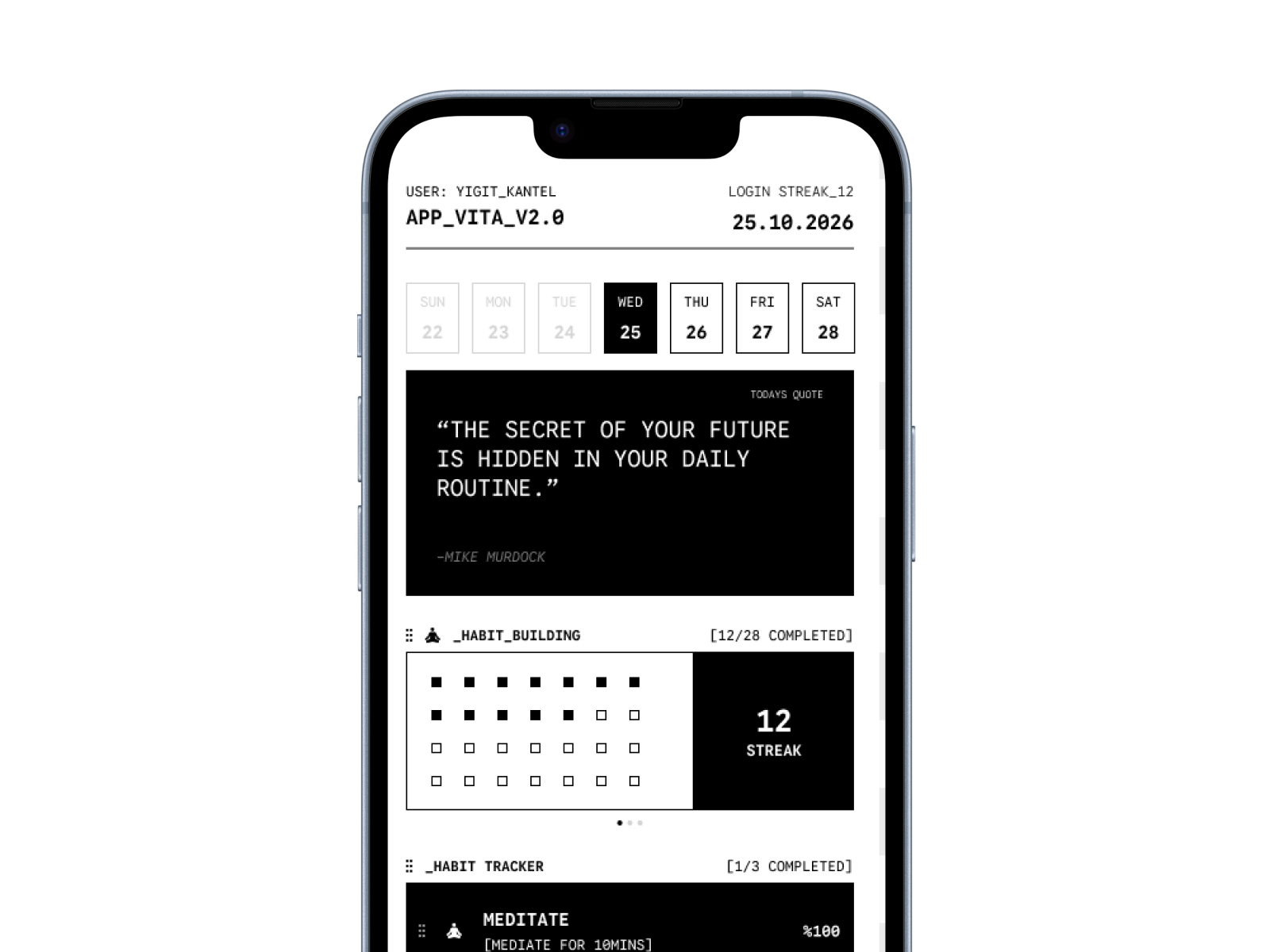
Digital wellness companion helping motivated individuals build sustainable daily habits.
The Challenge
Users want to exercise more, improve sleep, and enhance mental well-being — but struggle with consistency, lack of structure, and overwhelming expectations.
High abandonment
70% of users quit wellness apps within 90 days due to unrealistic expectations and poor habit scaffolding.
Motivation collapse
High initial motivation rapidly declines without structured support, feedback loops, or adaptive guidance.
Lack of structure
Users need a supportive, calm, and trustworthy experience — not another overwhelming to-do system.
Research Insights
Quit within 90 days
The vast majority of wellness app users abandon within three months. The gap is not in motivation — it's in the system's ability to sustain it.
Retention through personalisation
Users who receive tailored guidance report significantly higher consistency. Personalisation is the single strongest retention lever in the wellness category.
Stress & sleep as primary pain
For Gen Z users, stress management and sleep quality ranked as the top wellness concerns — above physical fitness — indicating a shift toward holistic health.
"The market is ready — but the gap is not in motivation, it's in structure."
Target Users
Five core needs shaped the design direction:
- Converting motivation into sustainable habits — not just information delivery
- Personalised, adaptive guidance responsive to mood and energy levels
- Interconnected support across mental health, sleep, and exercise
- Low-friction routines that integrate naturally into daily life
- Continuous encouragement with ongoing feedback systems
Market Positioning
Users need adaptive companions addressing whole-life context. The opportunity is not to add another isolated fitness tracker — it's to build a system that adapts to the full human context.
Competitive Analysis
Existing wellness apps share a common set of structural weaknesses. These gaps became the design opportunities for Vita.
Motivational messaging
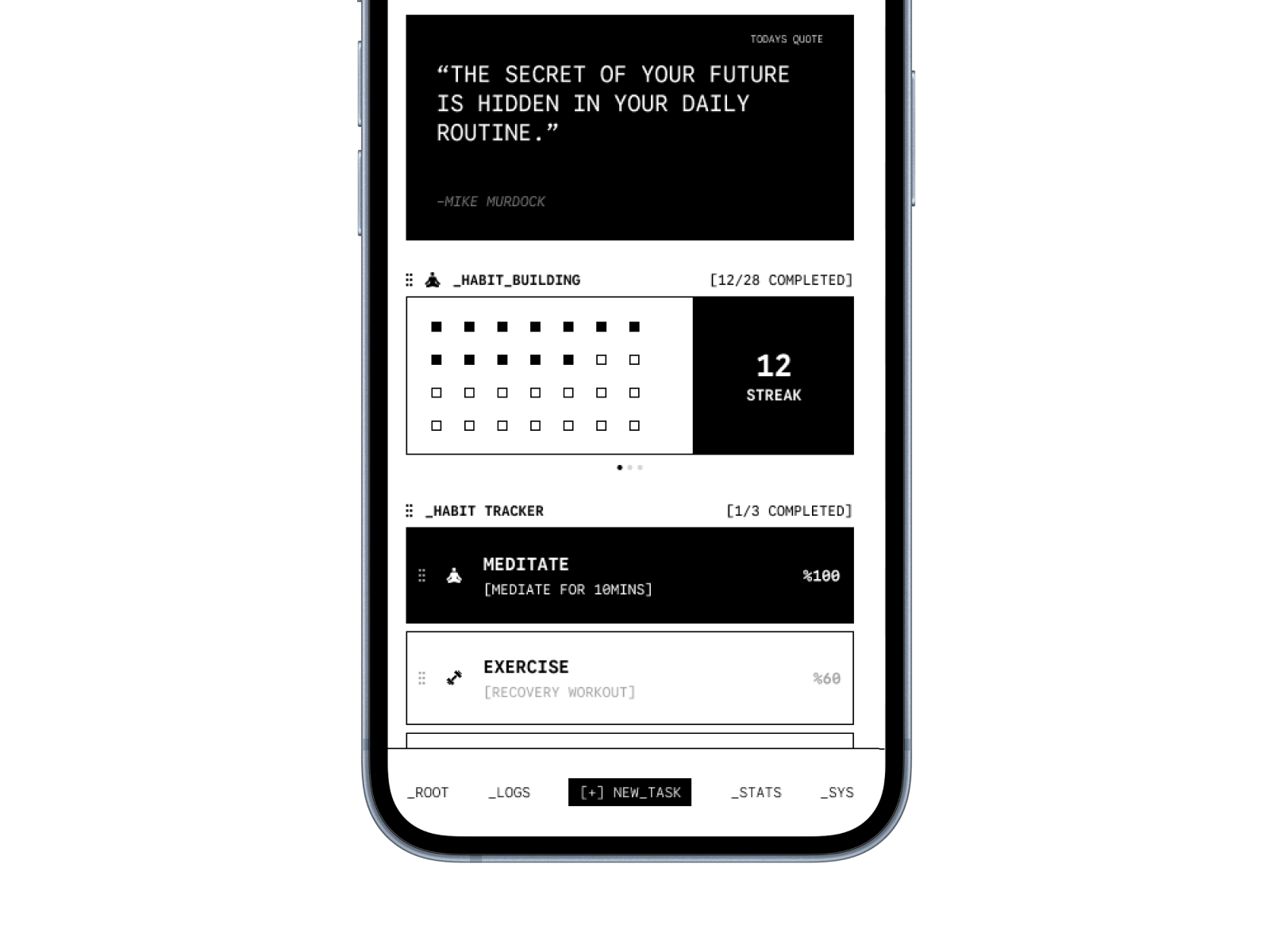
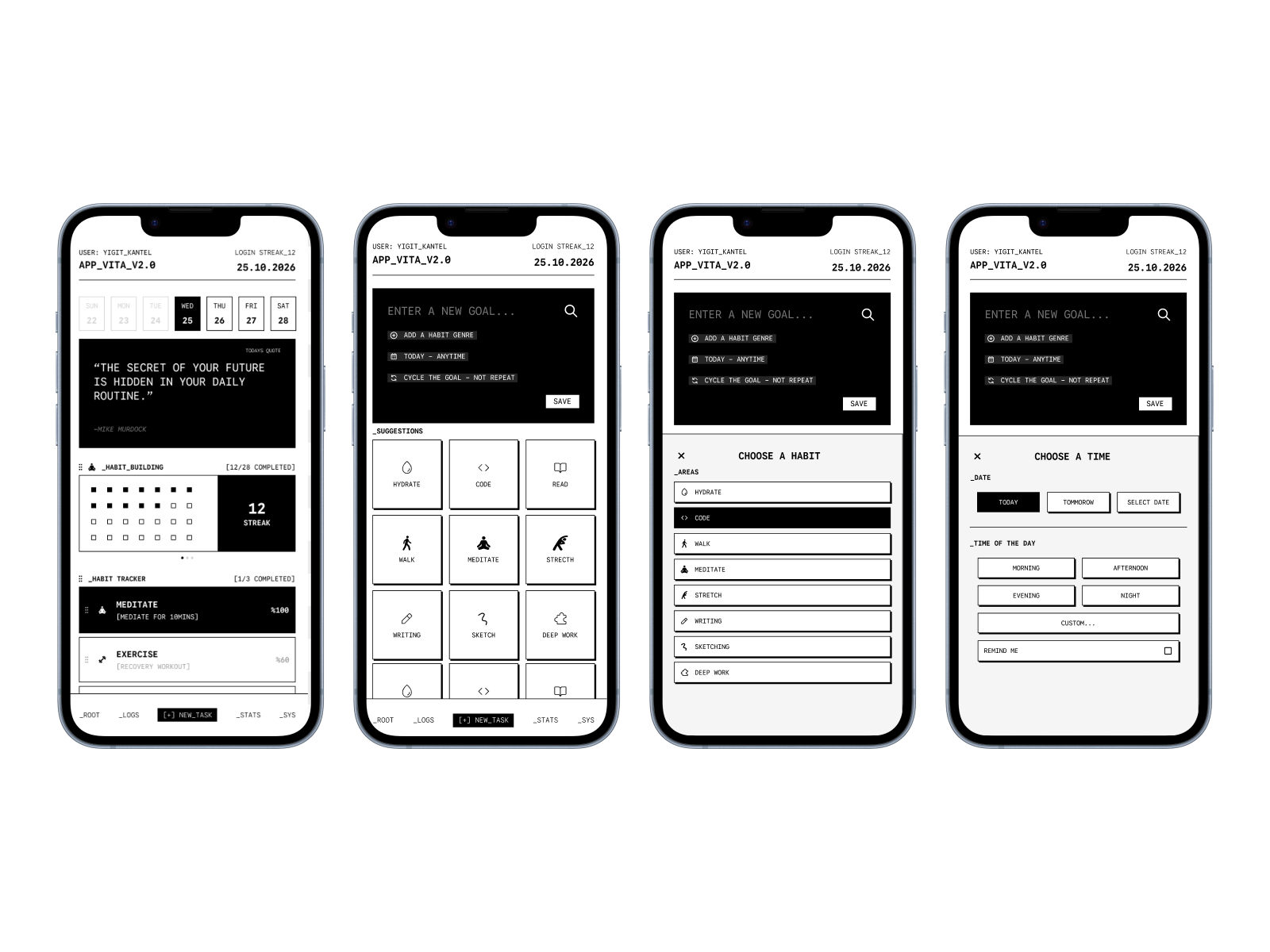
Competitors lack in-context motivational feedback. Vita introduces dynamic support messages tied to habit progress and mood state.
Stat-backed feedback
Generic encouragement fails to build trust. Vita surfaces personalised metrics and progress evidence to reinforce behaviour change.
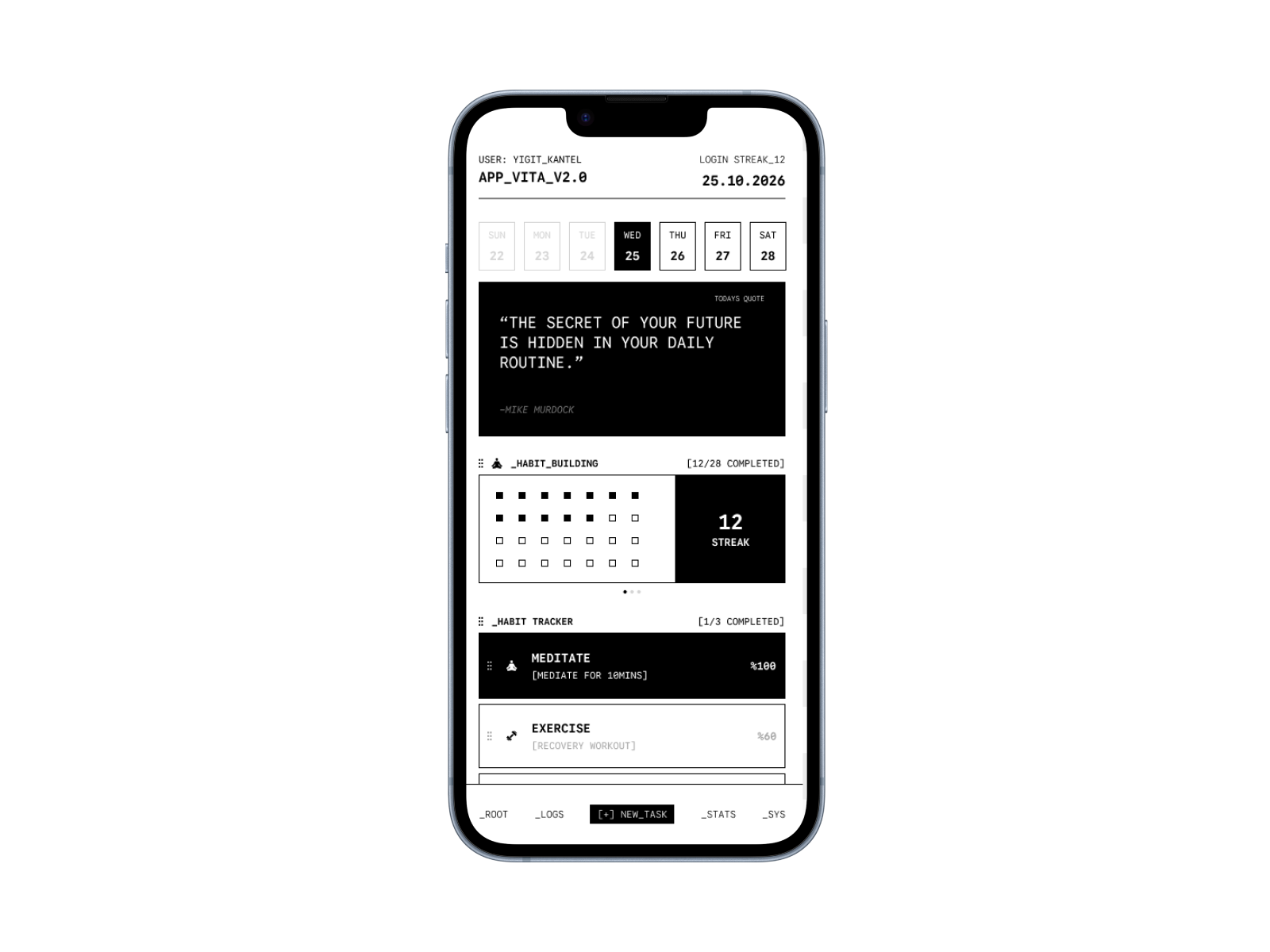
Customisable dashboard
Most apps impose rigid layouts. Vita enables users to reposition dashboard cards to reflect their personal priorities.
Solution
Key Learnings
Metric-driven research
Identifying the right wellness KPIs early — retention rate, abandonment rate — sharpened every design decision and kept the project anchored to real user outcomes.
Competitive mapping
Systematically evaluating competitor strengths and gaps turned weaknesses in the market into concrete design opportunities rather than vague inspiration.
Market positioning
Defining differentiation up front — whole-life context vs. isolated goals — prevented scope creep and gave the product a clear reason to exist.
Gap analysis
Revealing underserved opportunities in motivational feedback and personalisation unlocked the three core features that set Vita apart from existing solutions.